


St.Croix Update [Wed, Jul 2 2025 23:33 EDT]
21 hours ago
…that we left Barbados, but not really.
Yesterday morning I got up really early and took a few last minute sunrise pictures:
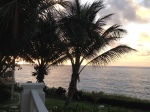
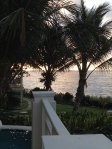
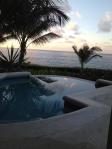

This one is my new favorite, though:

Sunrise at The Crane, Barbados
Then we got packed up and ready to leave by 10, then started reading, texting, just hanging around. Brenda stopped by and we talked quite a bit while Tom was finalizing his packing shutting down the computer and all. Brenda’s youngest daughter teaches English in Spain so they only see each other about every 3 years – except on Skype.
I reminded Tom that we didn’t have all the time in the world, that our plane was at 2:30 so we needed to be at the airport by 12:30 so we needed to leave…NOW.
We stopped to check out and ran into Bernice. She’s the first person I ever really met in Barbados and it’s always special to see her again. She’s often on holiday at least part of the time we’re there, though. She’s thinking about her next summer plans – either a 3-week conference or a cruise. What to do!
Then, Paul stopped by. He said that Culpepper Island will be partly finished by March and ready for tours when we get back next summer. I can’t wait to see that. It seems that we can trade our place for that as an even trade whenever we want.
We got a taxi for the quick trip to Grantley Adams Airport and were there by 11:30. We found out that our 2:30 plane had been changed to 3:15. <sigh>

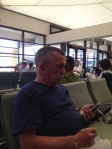
Tom texting at the airport
I think I have picture or Tom texting, calling, using his phone everywhere!
We were to leave from Gate 12. Then they said Gate 13 so we went there and went to board. Unfortunately, the shuttle was outside Gate 12 so we walked outside to the shuttle, got on and rode back past Gate 13.
Luckily there weren’t too many people on the flight to Miami so we were able to stretch out a bit.
We got to Miami about 15 minutes early so had to wait for a gate. Finally off the plane and going for the l-o-n-g walk to Immigrations and Customs.
The line for Immigrations was really long and moved slowly. We got near the front and were informed that we were not US residents, we were US citizens and needed to be in a different line, further away. The woman who told us that said we could get near the beginning of the other line. Of course, the official at that line said we couldn’t and Tom had some words with her. Luckily, we weren’t denied admission!
Finally through that and on to get luggage and on to Customs. That went pretty quickly and dropped off luggage so they could put that back on the plane.
We next had to wait in line for security – again – then a Sky Train to our real gate. This process took about 2 and a half hours. Last year doing the same process, we had time to get dinner at TGI Friday’s. We were the last ones on the plane, just made it before they closed the doors.
Whew!
We got to Dulles just before midnight. I called my mom and she said that the power was out in most of our neighborhood due to a tornado that had touched down in the afternoon.
Our luggage was the last off the plane. It even had a tag on it that said “Last Bag”. Who knew?
Another taxi and finally, home! We were lucky and had power.
My plan for Sunday was that Tom would go to a meeting and pick Mimi up on the way back. I would call Mom and we would go to Kick Off Sunday at church.
What really happened was Tom woke up for his meeting and accidentally got shaving cream in his eye. He told me he was going to the emergency room. I asked if he wanted me to take him but he thought it would be better if I picked up Mimi. OK
Off he went…then came back and said he had a flat tire. By now, I was definitely awake.
I emailed Thia to let her know I could pick up Mimi any time and said I’d call after 9. She emailed back to ask if I was home. I was going to respond since obviously she was awake but Tom called first. He was at the ER and they were going to hold him for a few hours to get the acid (who knew shaving cream had acid in it?) all out.
Just as I hung up from him, Thia and Mimi appeared at the door. Thia was on her way to church and they were going to her Mother-in Law’s afterwards and figured we’d want Mimi back before that.

Mimi comes home
I’m not sure Mimi was happy to be here with just me. At Thia’s there are a couple kids to play with as well as a cat and Mimi’s sister, Penny. I’m pretty boring, especially because I was more interested in napping than playing. I gave her a Frosty Paws and that helped for about 2 minutes.
Eventually Tom got home with antibiotics, eye washes and other stuff. Mimi was delighted to see him!
I’m glad I cancelled students tomorrow. The Piano Room needs a LOT of work before I can teach again. And laundry needs to be done…
We just saw this ship in Barbados harbor last Wednesday! Several folks on our Cool Runnings catamaran had come off this ship to sail with us.

From Totally Barbados
Barbados has unveiled plans to construct an ultra-modern cruise facility, in the capital city of Bridgetown.
Totally Barbados has been informed that, when completed, the Barbados Sugar Point Cruise Facility will allow the tourism-driven country to welcome some of the largest cruise ships in the world.
Another advantage of the facility is that it will in effect separate cruise and cargo activities, thereby addressing complaints about the two competing for limited space within the port.
The development will take place along Trevor's Way and involve reclaiming 15 acres of land from the sea, 100,000 square feet of which will be provided for commercial activity. Dredging is slated to begin in November 2012.
Minister of International Business and International Transport George Hutson said the project will be done in two phases, the first of which is estimated to cost 300 million dollars. He said the initial stage will include two cruise piers, arrival and departure facilities, along with parking lots.
The two-year project will be spearheaded by Barbados Port Incorporated in a joint venture with a consortium comprising Barbadian company SMI Infrastructure Solutions Incorporated and Royal Caribbean Cruise Limited, the world's second largest cruise operator.
Project to bring Jobs to Barbados
A minimum of 200 jobs are expected to be created during the construction phase, with 500 more added through related commercial activities.
Once completed, the facility is also expected to feature Barbados rum and sugar culture as a major theme throughout.
Minister Hutson said the Barbados government is banking on the new facility to attract more cruise ships, with a view to increasing the revenue generated from their passengers.
He pointed out that for Barbados to effectively compete with new and emerging tourism markets, it must improve the customer experience and satisfaction.
It is with that in mind, that the new facility will be constructed in such a manner as to offer the opportunity to experience Barbados cuisine, local music and even see local artisans prepare their products for sale.
Barbados wants to be Cruise Hub
The facility will bring Bridgetown to cruise passengers, the minister said. He also said that the development would assist Barbados' efforts to become a hub for cruise tourism.
Cruise tourism in Barbados has grown from just over 127,000 in 1985 to 726,543 last year. The highest number of cruise passengers 812, 863 was recorded in 2004.
According to the latest Central Bank of Barbados figures, which are for the first half of this year, the number of cruise passengers rose slightly, by 2.5 percent, although 21 fewer cruise ships visited.
The effort by the government to boost the intake from cruise tourism is in keeping with recommendations from the central bank, which has stressed that Barbados needs to earn more foreign exchange to register sustainable growth.
This paragraph didn’t make it onto some of the places I auto-post so I’ll add it here.
This is the end of the catamaran trip from yesterday:
Something new – just as we got back to the Careenage, the captain/crew started playing this and most everyone danced their way into port. What fun!
I usually try to keep a list of books I’ve read on trips. One thing I like about coming here to Barbados is that they have a book exchange and I can often pick up British books I might not be able to get in the states. Anne Perry was one of those authors I discovered here.
When I first got here I was reading
That’s a pleasant enough book but I don’t know if I’ll finish it or not. I just don’t really care enough about the plot or the characters. If there’s ever a moment when I’m somehow bookless, I might finish it.
On Tuesday, August 28, I had set up an auto-delivery to my Kindle of
I love the Gamache series. I discovered these books either last year or the year before here and have read the whole series. The characters are interesting and the plots are fascinating. They take place in Canada, which I find interesting.
I also like a mystery series by Michael Genelin which takes place in Slovokia about a female detective named Jana Matinova
At the end of the Gamache book was a note “…if you liked this book, you might like…”
So I tried
I usually read British novels from the 19th century and this was contemporary but I really enjoyed it, anyway. Loved the main characters and I hope the author, Emma Jameson, writes more in this series.
So then I read
I finished that this morning and started this
When that’s done, probably some time tomorrow afternoon, I’ll start
And that about wraps up this trip, I think…
I haven’t made very many blog posts this time around because we haven’t done much except read, work, nap and a few dips into the pool.
Yesterday, we went out on a catamaran, though – the Cool Runnings III.
They picked us up at 8:15 am. We were on time for once, but still the third of 3 couples going from The Crane. We didn’t make any more pickups. WooHoo!
So, we set off from the Careenage. This is an inlet into Bridgetown where several ships, boats and catamarans make berth. The “bridge” in Bridgetown is over the Careenage. There are two bridges now. The original is now a foot bridge with the newer, wider one for vehicles.
On any of these ships, they have an open bar and start off with yummy banana bread for a morning snack. After they clear the Careenage, they put up the sails and we’re off.

Tom on mobile – of course!
Our first stop of the morning was Payne’s Bay where Tom swam with the giant sea turtles. A woman taking pictures was talking kind of snootily to someone that “In Hawaii they gave them flippers…” I barged in and told her that they couldn’t have flippers at this stop because of the turtles but they would have them at the next. ”So?!?” I told her the turtles were an endangered species and didn’t like being kicked in the head with flippers. Sheesh!

Turtle at Payne’s Bay, Barbados
The second stop was Folkstone Marine Park. All these ships stop there because it’s home to a sunken barge. This creates a home for lots of marine life. I’m not very good at recognizing fish but I always know when I see a school of sergeant major fish.

School of fish, taken from the deck of Cool Runnings III
Our last stop was a swimming stop off Alley’s beach. During this stop, we had a typical Bajan tourist lunch. The main dishes in this are flying fish, barbecue chicken, peas’n'rice, green salad, potato salad, a lo-mein sort of dish and rolls. Sometimes a sweet coleslaw, macaroni pie or beef stew is added but not today. Today’s dessert was carrot cake with cream cheese. Just like at home!
I didn’t get in the water this time but that’s ok – I just love being on the boat.
Back home and into the pool.
The next post will be the one where I list what I’ve been reading on this trip. It will be fewer books since I’ve been working more than usual…
It was Wednesday and we had breakfast at L'Azure, one of the restaurants here at The Crane. I told Tom I couldn't take much more of staying in the penthouse. I felt like it was too big, I wasn't really here, that it was isolating being so far away from everything, that I felt like I was watching the pool area on a TV.
So, after breakfast, we packed our stuff and moved to our "home" - 211. It just feels so right to be here.
There was no one in 211B so the connecting door was left open. We actually own this apartment, too, but usually put it in the rental pool.
The year that my dear friend, Sue (SuziQ to Cushies), was here, she stayed in this apartment and used the garden a lot to think about things. She was going to come back with us the next year, too, but she died first :( I still miss her so much. I'm writing this in "Sue's garden" and remembering how special she was.

So, we've been going about our daily business, working mostly, a bit of reading, time by the little pool, a few naps scattered here and there...
Life is good.
I mentioned earlier today that I didn't think I was a fan of tower pools, although I've never been in one. To me, they seem like an outdoor bathtub.
The Crane's buildings have towers/turrets on the corners with plunge pools built into them. The one here in the penthouse involves a climb up 3 stairs to access.


"Our" regular pool seen from up here, right on the end, by the ocean. Next stop - Africa!

And the view from "our" regular pool can't be beat! The infinity edge makes it seem like it goes on, well, forever.

A normal day here I would have sat out in my bathing suit, reading, and when it got too hot, I'd hop in the pool for a bit. Today I read a lot and did computer work. The bathing suit is still dry...
What a trip!
I thought by packing earlier on Friday night I could sleep better. Not so - I was still awake most of the night thinking, worrying...
At 8:30am I left with Mimi for her sister's house. Mimi is so lucky - she doesn't even know what a kennel is.
I got back home and waited for Tom to get there. He rolled in at 10am, just after the taxi got there.
The trip to Regan airport was uneventfull. We actually got there about 10:30, possibly the earliest we have arrived for any flight.
Checkin, security, no problems. We decided to have something to eat at this little place by the gate. No coffee! AARRGGHH Tom convinced the manager that they should still have coffee at 10:45am.
Boarded plane. We had seats D and F. Tom convinced the woman in E that she'd like to move back a couple rows closer to her husband...and we had no one in E so could stretch out a bit more.
From the beginning this was a bumpy ride, thanks to Hurricane Isaac which was headed to Miami, same as us. You can see him just over Cuba at 60 miles per hour at the time we were nearing Miami.

We finally landed and found our next gate, only 4 gates away. Gate 1 was already fairly crowded with people headed to Barbados.
I found a little newsstand with the nut/fruit bars I like. I got 2 at $3.99 each.
Settled in for the 2 hour wait and an announcement came up that we were leaving 30 minutes early. Ok, great for us, not those running for a connection.
Waited a bit more. Announcement that our plane had major issues and they would find us a new one
Waited. New gate. Now gate 50 which is 2 terminals away by sky train and we had 30 minutes to get there.
We navigated all that and got there to learn they'd found a plane but it needed to be made ready.
Tom went to the newsstand for snacks. The only thing I'd had so far was that fruit/nut bar at gate 1
He came back with a variety of stuff, including some more fruit/nut bars. But at this gate they were only $2.89. Go figure!
Finally, we got onboard. We were the last flight out of Miami for a few days. Another bumpy trip but we made it to Barbados at 11:30. Naturally, out suitcase was nearly last on the carrousel but it arrived! Through Immigration and Customs and off to Stoute for our rental car. Tom's debit card was rejected...we'd forgotten to let them know we were traveling.
We got to The Crane just before midnight and found out that the people who had been in our apartment last week hadn't been able to leave so they were giving us the penthouse for the night, the week or the whole trip.

This place is huge, too big for us. If Michael can come this weekend, that would be good but otherwise...
We opened up all the doors for a cross breeze, looked around a bit and fell asleep.
Early on Sunday, Tom went to his usual meeting and I poked around. This place didn't seem to have a laundry, a feature we rely on heavily but I found one across the hall.
I do hate the "tower pools" but I haven't actually been in one yet. Maybe it won't be so bad.
I texted Michael and Alice to let them know we'd gotten here and called my mom.
Did some work and started this blog post. The wifi up here is very slow and the first picture hasn't even uploaded yet. Maybe I'll add the other to another post...later.
Tom came back with salt bread so all is well in my world!
Bajan Salt Bread
This traditional bread made in Barbados, is one of the only breads that isn't very sweet. However don't let the name fool you. This bread is definitely not salty. This bread can be used to accommodate almost any filling. This local delicacy is the housing for the popular bread & two which consists of salt bread filled with two fish cakes.
You can find salt breads at bakeries and bread shops throughout the island of Barbados. A pack usually contains six (6) salt breads sold in clear plastic bags. Bajan Salt Breads are baked daily and would usually be accompanied by a piece of khus grass on the bread, but do not be afraid! This is to preserve the freshness of the bread. Enjoy!


